Tom Sachs’s Model Thirty-Six (2014), experimental stereos that challenge the established notions of form and function, in the collection of San Francisco Museum of Modern Art.

Integrating Musicology, Psychology, and Technology in Education

One of my main goals while teaching MUS2640 – Sensing Sound and Music last semester was the integration of perspectives from musicology, psychology, and technology. The main point is to introduce the basics of music psychology and music technology, two disciplines that are quite distinct in most places, but which we at the University of Oslo have a tradition of combining. In this post, I explain the rationale. Three “logies” One of my main arguments is that we should consider the three “logies” involved in this course: ...

January 13, 2026 · 8 min · 1535 words · ARJ

Teaching soundscape listening and recording

I am teaching the course MUS2640 – Sensing Sound and Music again this semester. It is the second time I’ve run the course, and I can build on the experience I gained last year. One of the course’s aims is to encourage students to listen attentively and develop the capacity to discuss what they hear systematically. Last year, it worked very well to have students record a (any!) soundscape and reflect on the experience. More precisely, they were tasked to (1) listen to a sound(scape), (2) record it with any device available, (3) share it on Freesound, and (4) reflect on the difference between what they heard and the recorded sound. It is a simple task, but it has many layers that can contribute to the learning process. ...

September 13, 2025 · 5 min · 862 words · ARJ

Teaching with Mind Maps

This semester, I have taught a new course at the Department of Musicology at the University of Oslo: MUS2640 – Sensing Sound and Music. Since I have been “bought out” to run RITMO Centre for Interdisciplinary Studies in Rhythm, Time and Motion since 2018, I haven’t taught a regular class in many years. However, all my colleagues were busy with other things, and I thought it would be fun to engage with bachelor’s students again on a regular basis, so I took the challenge. ...

December 19, 2024 · 5 min · 911 words · ARJ

FAIR data as an enabler for research-led education

As part of my duties as a Norwegian member of EUA’s Open Science Expert Group, I was asked to write an “expert voice” on how to think about FAIR data from an educational perspective. Below is a copy of my short article. How Findable, Accessible, Interoperable and Reusable data enables research-led education FAIR data is an essential component of the open research ecosystem. In this article, Alexander Refsum Jensenius argues that “FAIRification” can also benefit research-based and research-led education, providing opportunities to bring together different university missions. ...

November 6, 2023 · 4 min · 826 words · ARJ

Length vs Duration

I often see that people confuse the two terms “length” and “duration”. In most cases, it doesn’t matter, but there are subtle differences one should be aware of. Here is a quick reference: length = a count (number of items, characters, samples, notes) duration = a time span (how long something lasts) In music research, the difference matters! For example, if you ask about the “length of a piece of music”, it could refer to the number of notes in the score (e.g., 189 notes). The duration, however, would be the playback time (e.g., 3 minutes 20 seconds). Obviously, the playback time is related to the tempo, the same length of notes at different tempos yields different durations. ...

October 25, 2023 · 1 min · 163 words · ARJ

Tips for a public PhD defense

Yesterday, I gave some PhD dissertation advice. Today, I will present some tips for PhD candidates ready for public defense. In Norway, the public defense is a formal event with colleagues, friends, and family present—we typically also stream them on YouTube. The good thing is that when you are ready for the defense, the dissertation has already been accepted. Now it is time to show lecturing skills in the trial lecture and the ability to engage with peers in the disputation. ...

September 21, 2023 · 4 min · 817 words · ARJ

New MOOC: Pupillometry – The Eye as a Window Into the Mind

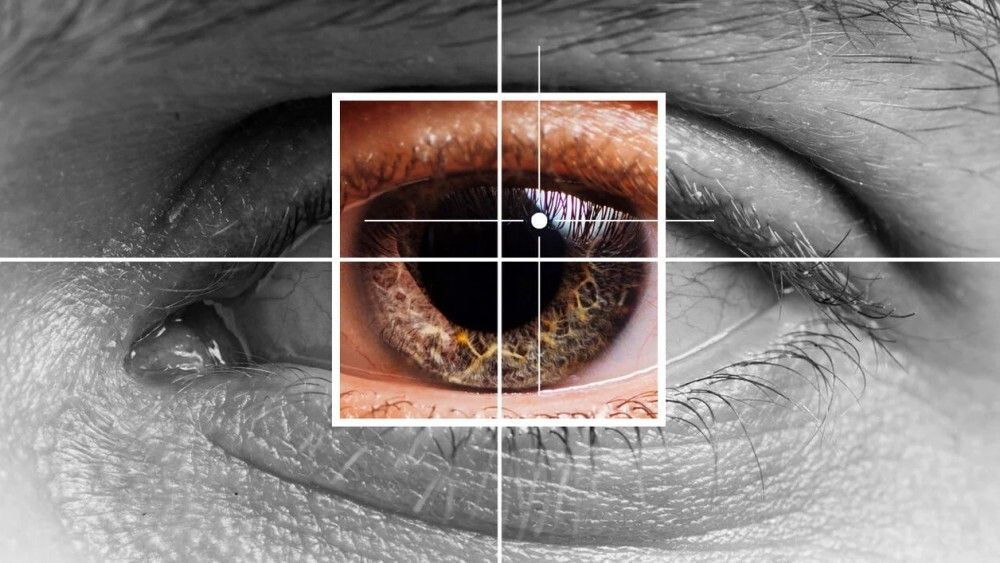
I am happy to announce a new online course from RITMO: Pupillometry – The Eye as a Window Into the Mind. This is the third so-called Massive Open Online Course (MOOC) I have been part of making, following Motion Capture and Music Moves. I am excited to get it started on Monday, 16 January. Discover the applications of pupillometry research Pupillometry is a relatively new research method within the sciences, and it has wide-ranging applications within psychology, neuroscience, and beyond. This six-week course teaches both pupillometry and eye-tracking methods in depth before investigating some exciting and unusual applications of this far-reaching research method. ...

January 13, 2023 · 2 min · 308 words · ARJ

Running a workshop with a Jupyter Notebook presentation

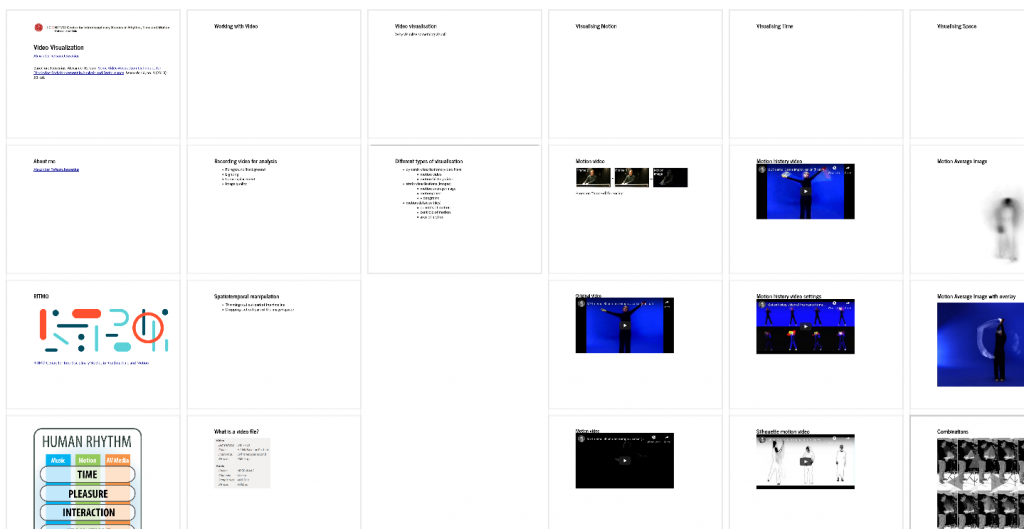
Today, I ran a workshop called Video Visualization together with RITMO research assistant Joachim Poutaraud. The workshop was part of the Digital Scholarship Days 2023 organized by the University of Oslo Library, four days packed of hands-on tutorials of various useful things. Presentation slides made by Jupyter Notebook Joachim has done a fantastic job updating the Wiki with all the new things he has implemented in the toolbox. However, the Wiki is not the best thing to use in a workshop, it has too much information and would create an information overload for the participants. ...

January 12, 2023 · 3 min · 585 words · ARJ

Preparing videos for FutureLearn courses

This week we started up our new online course, Motion Capture: The Art of Studying Human Activity, and we are also rerunning Music Moves: Why Does Music Make You Move? for the seventh time. Most of the material for these courses is premade, but we record a new wrap-up video at the end of each week. This makes it possible to answer questions that have been posed during the week and add some new and relevant material. ...

January 28, 2022 · 2 min · 376 words · ARJ

New online course: Motion Capture

After two years in the making, I am happy to finally introduce our new online course: Motion Capture: The art of studying human activity. The course will run on the FutureLearn platform and is for everyone interested in the art of studying human movement. It has been developed by a team of RITMO researchers in close collaboration with the pedagogical team and production staff at LINK – Centre for Learning, Innovation & Academic Development. ...

January 7, 2022 · 5 min · 926 words · ARJ