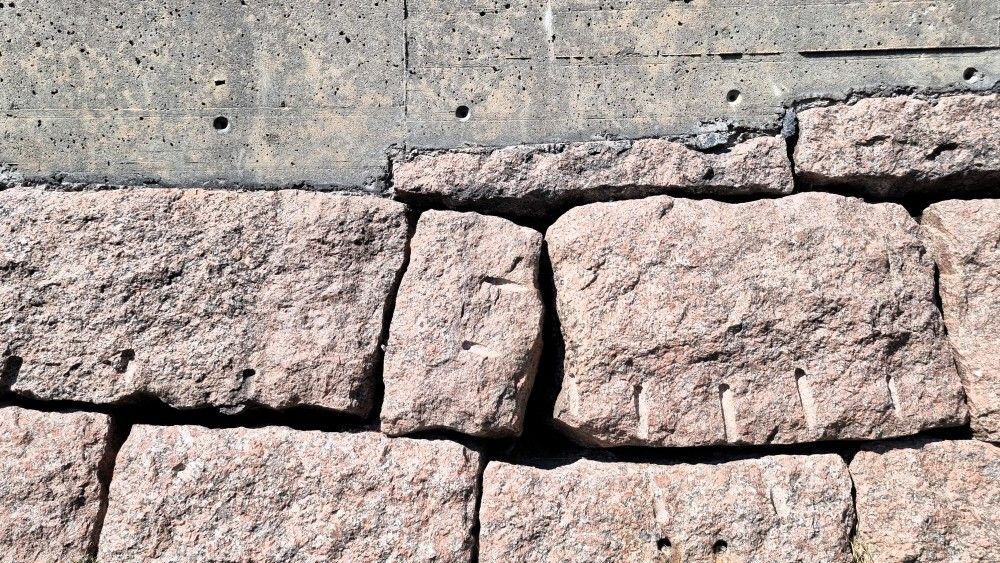
A detail from a building in Montpellier, where I am currently participating in the MOCO conference.

Retrieving data from an ORCID profile

After concluding that it is not viable to use institutional person pages to build a “Who’s Who” directory for MishMash, I yesterday found that NVA can be a good solution. However, it would only cover affiliated (Norwegian) researchers, which may be too restrictive for MishMash, where we also want to list non-academic, non-affiliated, and international researchers. Then, ORCID may be a better solution. This is an international registry where researchers can register themselves (check my ORCID profile). However, what information is available there and how can it be retrieved? ...

April 23, 2026 · 3 min · 458 words · ARJ
A detail from a street in Montpellier, where I am currently participating in the MOCO conference.

Retrieving data from NVA

I have seen that it is possible to build a complete CV from NVA data, the Norwegian research registry. As part of my quest to collect data of researchers connected to MishMash, I am looking for the best data source(s). Starting with a quick check of my own personal page at UiO, showed that institutional person pages are not the right solution. But what about NVA? Perhaps that is a viable solution? ...

April 23, 2026 · 3 min · 503 words · ARJ
Fish looking for food could (perhaps) be seen as a metaphor for retrieving information from the web.

Building a 'Who's Who' directory from institutional data

The Open Graph standard has helped “automagically” collect information about partner events on MishMash.no. Now, we have started building a “who’s who” directory, and I have begun looking into how we can pre-populate pages from existing academic identity sources rather than asking everyone to fill out web forms. My first inclination was to look at what is available on institutional websites. Most researchers have at least one institutional personal website. In this blog post, I look at what can be retrieved from my UiO page. ...

April 22, 2026 · 2 min · 330 words · ARJ

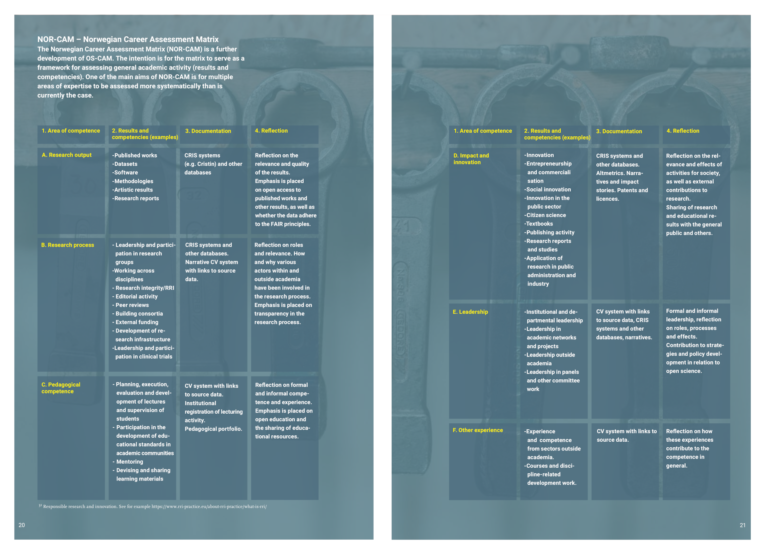
Building a NOR-CAM CV for Alexander Refsum Jensenius

I have previously explored how NotebookLM can generate ERC-style CVs based on publicly available research information. Now, I was curious to see whether it could also make a complete CV following the guidelines of the Norwegian Career Assessment Matrix (NOR-CAM). The NOR-CAM principles Creating a CV that follows the NOR-CAM principles is less about listing dates and more about telling the story of an academic career through a balance of quantitative data and qualitative reflection. If you are interested in learning more about NOR-CAM, have a look at the full report. Here is a 4-minute video introduction to the system: ...

April 21, 2026 · 5 min · 986 words · ARJ
A mosaic from Coimbra, Portugal. There is no connection between this image and the content of this post except that one could think of the Open Graph standard as building a mosaic of web content.

Understanding the Open Graph Standard

We are currently working on developing the MishMash webpages. Since I don’t like adding and editing the same information in multiple places, I have been interested in whether the MishMash pages can (as far as possible) “automagically” collect information from other locations. When setting up our partner events pages, I realised that it was possible to collect most of the useful information (title, location, date, image) from the metadata of the pages already hosted on other websites. This makes it much easier to add partner events than if we had to set up our own pages on MishMash.no, which would also duplicate much content. The standard making this happen is called Open Graph. Since I didn’t know about this before I began my little adventure, here is a short overview. ...

April 19, 2026 · 4 min · 844 words · ARJ

Using Google NotebookLM to summarize my academic results

I find Google’s NotebookLM to be one of the most powerful tools for researchers these days. Its core function is to work with the material you upload. Hence, it differs from ChatGPT and other tools that invent things on their own or search the web. It also has many different types of reports, including audio and video. But how accurate is it? Testing NotebookLM To test NotebookLM on some material I know very well, I decided to provide it with a collection of public data about myself, more specifically, what I have registered in the Norwegian NVA system, which is the database we use in Norway to register all our academic activities. This includes academic publications, public lectures, artistic works, interviews, etc. In my case, that contains around 1000 entries dating back to 2000. ...

January 2, 2026 · 10 min · 1963 words · ARJ

Data, Metadata and Paradata

I have had some interesting discussions about what constitutes metadata these days. What is really the difference between metadata and data? While participating in ESOF today, I came across the term paradata, which was new to me. What is that, and how does it differ from data and metadata? Data Data refers to raw facts, observations, measurements, or representations of information in various formats, such as numbers, text, images, audio, or video. It is the foundation of knowledge and is essential for making informed decisions, conducting research, and gaining insights across various domains. ...

June 13, 2024 · 4 min · 775 words · ARJ

New research data careers

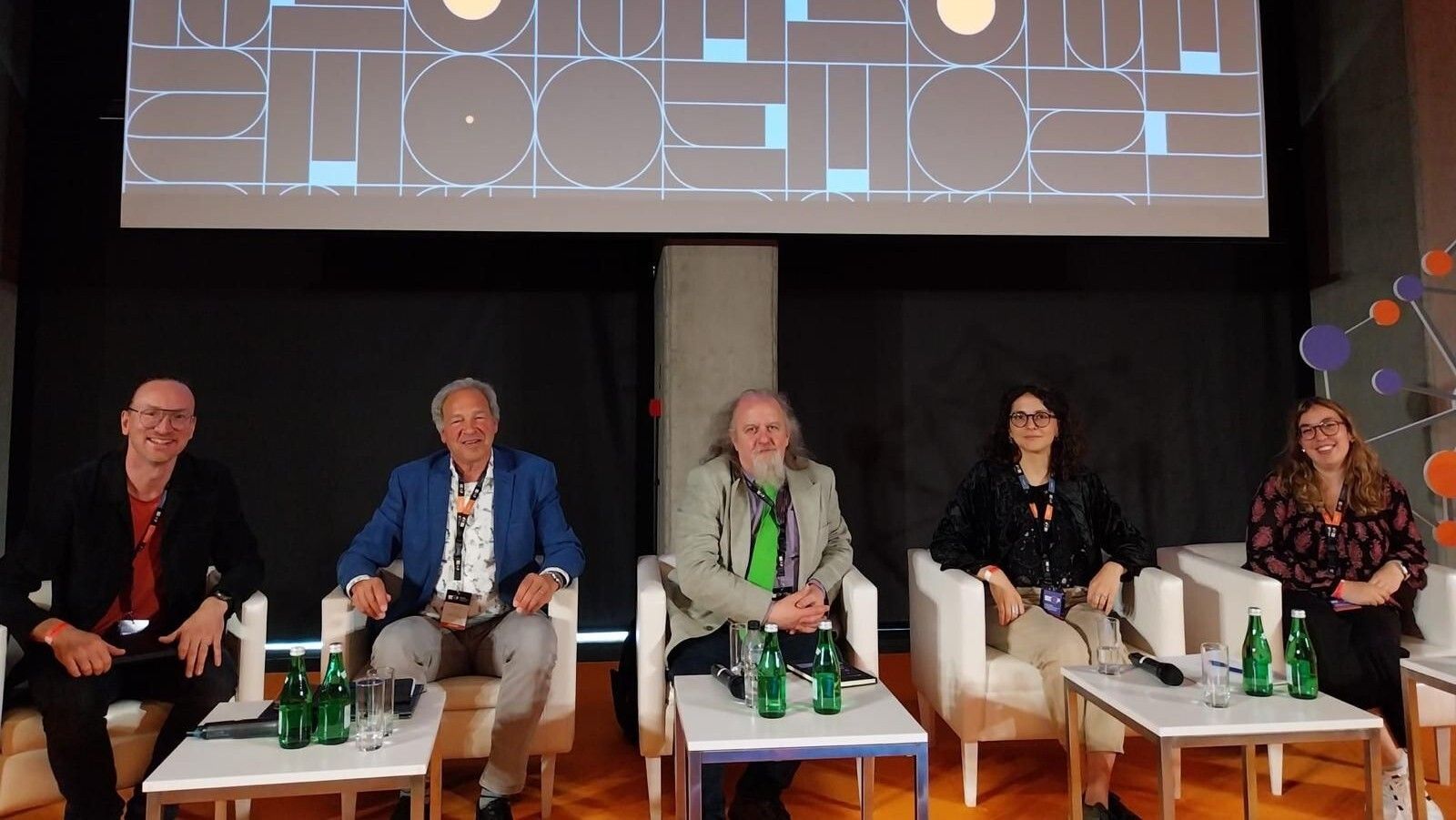
There is an increasing focus on making data openly available, or at least archived according to the FAIR principles. This has also led to the need for more knowledge and skills in data management at all levels. For some, this is becoming a career path on its own. That was the topic of the panel session “Fostering the emergence of new research data careers” I moderated at EuroScience Open Forum (ESOF2024) in Katowice, Poland, today. ...

June 13, 2024 · 2 min · 309 words · ARJ

Data Born FAIR

At the last meeting of EUA’s Open Science Expert Group, we discussed the need for data to be “born” FAIR. What does that entail? FAIR data Just a recap: For data to be openly available (what is often called Open Data), they also need to be FAIR, which stands for Findable, Accessible, Interoperable, and Reusable. However, not all FAIR data needs to be open. At RITMO, we often find that we need to protect data due to copyright and/or privacy reasons. Still, we try to make as much as possible of our data openly available. Other times, we try to make some aggregated data available to support the conclusions in papers. ...

May 23, 2024 · 3 min · 509 words · ARJ

Open Culture vs Open Research

I have been an open research advocate for many years, but have not yet written much about open culture. In fact, I hadn’t thought much about the term before I came across a Creative Commons blog post. Open Culture As it turns out, “open culture” seems to be a relatively new term, also to them. The CC team shares three reasons for using the term: Open culture is readily understandable and does not include an unfamiliar acronym Open culture is broad in scope envisioning open sharing of cultural heritage as a participatory experience Open culture encapsulates the synergies between culture as heritage and as contemporary creativity Their approach appears to be mostly centered on the needs of “GLAMs”: galleries, libraries, archives, and museums. However, it is an interesting move, and it could help spread the word about the need to enhance openness. ...

April 21, 2024 · 2 min · 328 words · ARJ