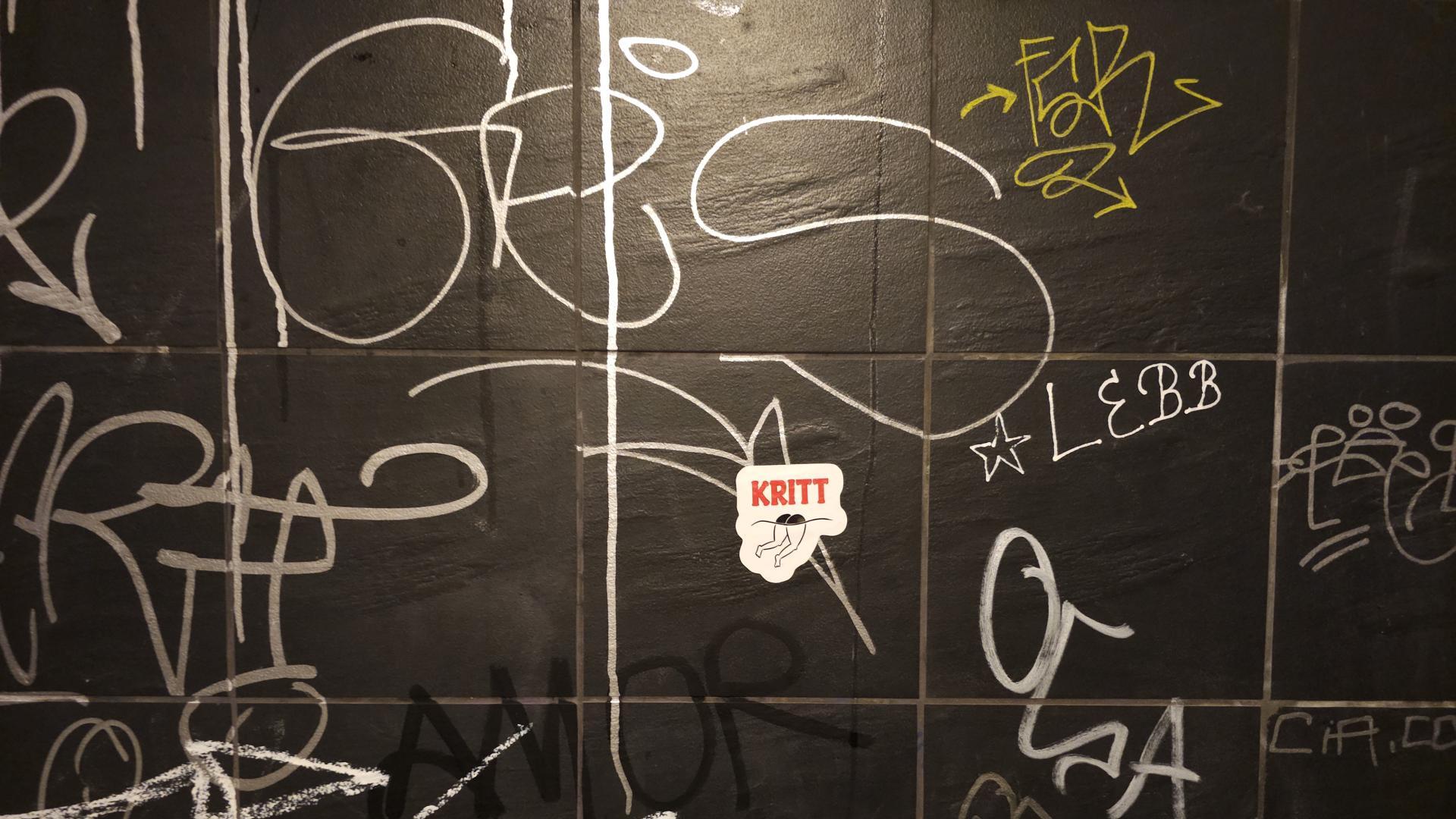
A detail from a street in Montpellier, where I am currently participating in the MOCO conference.

Retrieving data from NVA

I have seen that it is possible to build a complete CV from NVA data, the Norwegian research registry. As part of my quest to collect data of researchers connected to MishMash, I am looking for the best data source(s). Starting with a quick check of my own personal page at UiO, showed that institutional person pages are not the right solution. But what about NVA? Perhaps that is a viable solution? ...

April 23, 2026 · 3 min · 503 words · ARJ

Building a NOR-CAM CV for Alexander Refsum Jensenius

I have previously explored how NotebookLM can generate ERC-style CVs based on publicly available research information. Now, I was curious to see whether it could also make a complete CV following the guidelines of the Norwegian Career Assessment Matrix (NOR-CAM). The NOR-CAM principles Creating a CV that follows the NOR-CAM principles is less about listing dates and more about telling the story of an academic career through a balance of quantitative data and qualitative reflection. If you are interested in learning more about NOR-CAM, have a look at the full report. Here is a 4-minute video introduction to the system: ...

April 21, 2026 · 5 min · 986 words · ARJ
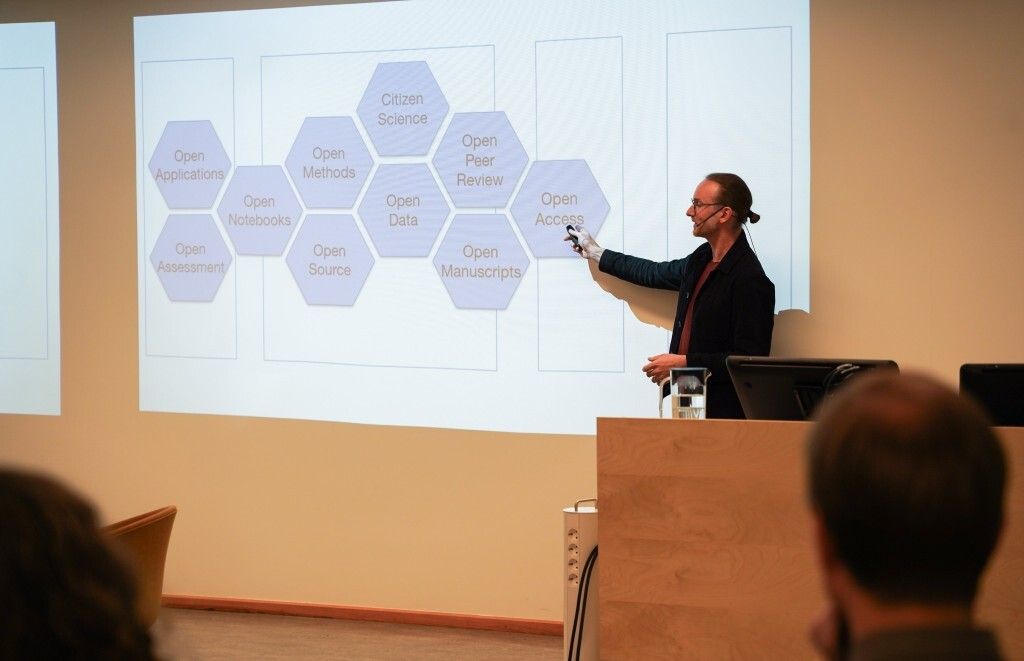
Preparing to speak in front of a 500-person audience at NARMA with MishMash deputy director Ida Jahr and administrative coordinator Eskul Muan Sæther.

Creating an ERC-style CV with NotebookLM

While part of the group that developed the Norwegian Career Assessment Matrix (NOR-CAM), I strongly advocated for the development of an “automagic” CV system. This was based on the fact that I (and many other researchers) spend too much time working on formatting our CVs for new templates. All funders have their own CV templates, which often change from year to year. Copying and formatting the same information over and over is (literally) a waste of time, so there is room for improvement. ...

March 18, 2026 · 5 min · 879 words · ARJ

Using Google NotebookLM to summarize my academic results

I find Google’s NotebookLM to be one of the most powerful tools for researchers these days. Its core function is to work with the material you upload. Hence, it differs from ChatGPT and other tools that invent things on their own or search the web. It also has many different types of reports, including audio and video. But how accurate is it? Testing NotebookLM To test NotebookLM on some material I know very well, I decided to provide it with a collection of public data about myself, more specifically, what I have registered in the Norwegian NVA system, which is the database we use in Norway to register all our academic activities. This includes academic publications, public lectures, artistic works, interviews, etc. In my case, that contains around 1000 entries dating back to 2000. ...

January 2, 2026 · 10 min · 1963 words · ARJ

CoARA principles in practice

Some years ago, I was heavily involved in the development of NOR-CAM (Norwegian Career Assessment Matrix), a framework designed to support the assessment and recognition of a broad range of academic activities and competencies. This work aimed to promote more comprehensive and transparent evaluation practices in academia. One thing is developing high-level policies; another is trying these things in practice. I am fortunate enough to direct a research centre (RITMO), which involves a significant amount of career development work daily. I was therefore pleased to be invited by the Coalition for Advancing Research Assessment (CoARA) to discuss my experiences with the NOR-CAM principles in an interdisciplinary setting. ...

March 18, 2025 · 5 min · 952 words · ARJ

Peer Review is Killing Science

Peer review is the gold standard for scientific work. Some people argue that the fact that an article has been peer-reviewed is what makes it scientific. I would not go that far. In my opinion, research is scientific because it is conducted according to scientific standards, not because someone else has read it. However, having peers review your work is a quality mechanism that ensures that others agree that those scientific standards have been met. ...

October 19, 2024 · 6 min · 1115 words · ARJ

Reformatting my CV according to the NOR-CAM Principles

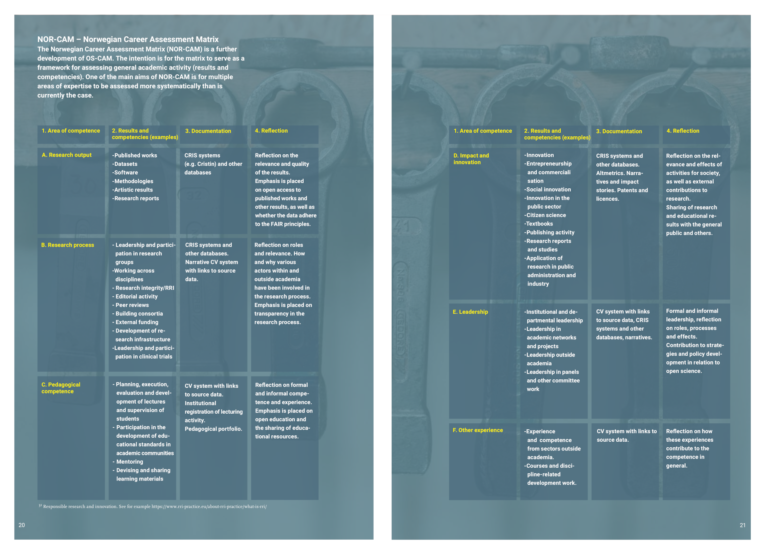
I was involved in the development of NOR-CAM (Norwegian Career Assessment Matrix) a couple of years ago (see former blog post). If you want a quick introduction, here is a short video I have recorded to introduce the main concepts: Here is the illustration of the matrix in the NOR-CAM report: Formatting my own CV In the report, we emphasized that the main point is the concept, and the details need to be worked out. But how would that work in practice? To do as I preach, I have now attempted formatting my own CV according to the NOR-CAM principles. To make it browseable, I have used collapsible menus for each of the six main categories: ...

June 6, 2023 · 1 min · 204 words · ARJ

Different Publication Cultures

At RITMO, we have several different disciplines working together. The three core disciplines at RITMO are musicology, psychology, and informatics. In addition, we have people working in philosophy, physics, computer science, biology, dance studies, and so on. This also means that we have several different publication cultures. In this blog post, I will reflect on the differences between them. The Paper Proceedings Culture My professorship is in music technology. I don’t know if music technology should be considered a discipline; it might be better described as a community of communities. Music technologists have different types of backgrounds and work in many different institutions. RITMO has music technologists from musicology (the Faculty of Humanities) and informatics (the Faculty of Mathematics and Natural Sciences). The latter builds on what I call a paper proceedings publication culture. Informatics, computer science, and various types of engineering are fast-moving fields that often publish in what is called “conference proceedings”. ...

May 7, 2023 · 5 min · 898 words · ARJ

Explaining the Norwegian Career Assessment Matrix (NOR-CAM)

The Norwegian Career Assessment Matrix (NOR-CAM) is a toolbox for recognition and rewards in academic careers that was launched by Universities Norway in May 2021. I was part of the working group developing the toolbox and have blogged about this experience previously. There has been much interest in NOR-CAM and I have held numerous presentations about it since it was launched. Most of these presentations have been held live (and often on Zoom). Now I was asked if I could record a presentation to be shown during a conference, and this was an opportunity to make a more concise presentation to make available online: ...

November 21, 2022 · 1 min · 128 words · ARJ

The status of FAIR in higher education

I participated in the closing event of the FAIRsFAIR project last week. For that, I was asked to share thoughts on the status of FAIR in higher education. This is a summary of the notes that I wrote for the event. What is FAIR? First of all, The FAIR principles state that data should be: Findable: The first step in (re)using data is to find them. Metadata and data should be easy to find for both humans and computers. Machine-readable metadata are essential for automatic discovery of datasets and services, so this is an essential component of the FAIRification process. Accessible: Once the user finds the required data, she/he/they need to know how they can be accessed, possibly including authentication and authorisation. Interoperable: The data usually need to be integrated with other data. In addition, the data need to interoperate with applications or workflows for analysis, storage, and processing. Reusable: The ultimate goal of FAIR is to optimise the reuse of data. To achieve this, metadata and data should be well-described so that they can be replicated and/or combined in different settings. This sounds all good, but the reality is that FAIRifying data is a non-trivial task. ...

February 4, 2022 · 6 min · 1263 words · ARJ