The four use cases considered in this article (from left): reactive paintings, a birdbox, self-playing guitars, and an interactive music ball.

Inverse and indirect mappings

I am excited to announce the publication of a new paper that explores several themes I have been interested in recently: inverse and indirect mappings, embodied AI, and indoor environments. The paper, titled Inverse and indirect mappings in embodied AI systems in everyday environments, is written by PhD fellow Maham Riaz together with my former PhD fellow Cagri Erdem and myself. Embodied AI The paper is written for a special issue on “embodied AI”, a topic I have been interested in for many years. AI research has long focused largely on the “brain” of machines. While that has been successful, we will not be able to progress unless we also consider that machines need to have a body that can sense and act. ...

January 15, 2026 · 4 min · 673 words · ARJ

Dancing and Musicking

It is somewhat embarrassing that I did not “discover” it before, but I only recently realized a striking parallel between the terms dancing and musicking. Music as a verb (“to music”) is only used by a small subset of music researchers, while “to dance” is universally accepted. Why? Musicking Christopher Small introduced the term musicking in the 1990s as a framework for understanding music as a social activity, using music as a verb (“to music”) rather than a noun (“music”). Though still not universal in musicology, the term has gained traction in music education and therapy, where participation in communal music practices is central. ...

December 21, 2025 · 3 min · 499 words · ARJ
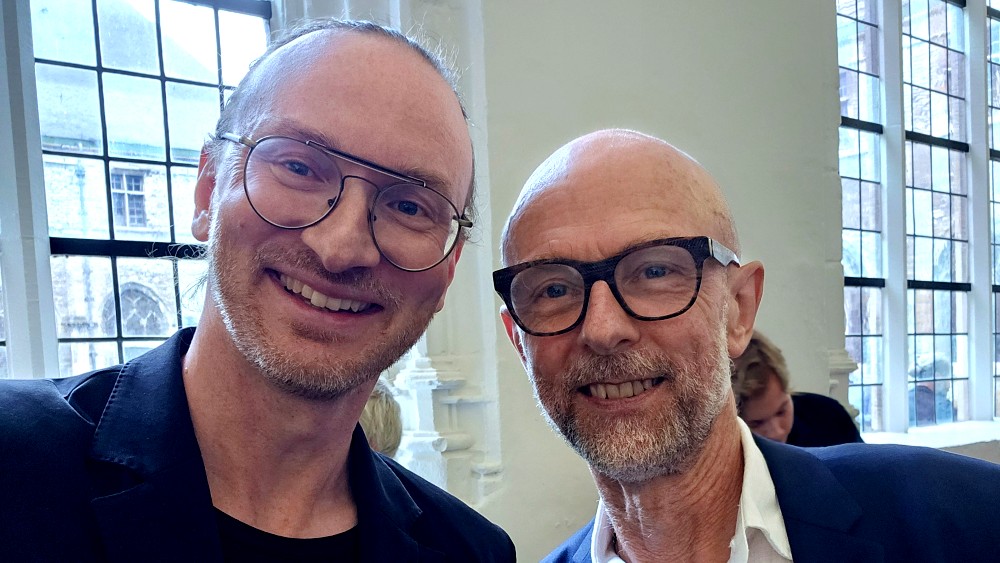
A picture of me and Marc Leman during his retirement symposium on 6 September 2024

Embodied Musicking Technologies

This text was written for the festschrift for the symposium on 6 September 2024 celebrating Marc Leman’s achievements as professor of Ghent University and marking his retirement. In his seminal book Embodied Music Cognition and Mediation Technology, Marc Leman (2008) drew up a theoretical framework that has influenced a whole new generation of researchers, myself included. Building on a long tradition of systematic musicology, combined with ecological psychology and modern technology, he convincingly set the direction for a fresh approach to scientific studies of musical experiences. In the following, I will reflect on some concepts raised in his discussion and also point out some that he did not address completely, but that have been left for others, like myself, to explore in more details. ...

September 6, 2024 · 9 min · 1857 words · ARJ
Flowers

Tripnote summer 2024

Today is midsummer, and with that I enter “summer mode”. A year ago, I wrote about why I chose to make an explanatory tripnote. Nowadays, most people are never really offline. Still, we all need time off. For me, that includes doing many things that I don’t typically have time to during the busy semesters. I received many positive comments on my tripnote last year, so I decided to make another this year. Here it is: ...

June 21, 2024 · 2 min · 316 words · ARJ

Musicking Technologies

One of the conclusions in my book Sound Actions is that the future of music technologies lie in musicking technologies. The term “music technology” is typically used to describe tools, instruments, and systems used to create, produce, record, and distribute music. This includes everything from microphones, digital audio workstations (DAWs), and synthesizers to streaming services and analysis tools. I think of “musicking technology” as a wider term than music technology. It builds on Christopher Small’s concept of “musicking” as the act of taking part in music-making of any kind. It also focuses on music as an active process, not a thing. ...

January 13, 2023 · 1 min · 187 words · ARJ

Exploring Essay Writing with You.com

There has been much discussion about ChatGPT recently, a chat robot that can write meaningful answers to questions. I haven’t had time to test it out properly, and it was unavailable when I wanted to check it today. Instead, I have played around with YouWrite, a service that can write text based on limited input. I thought it would be interesting to ask it to write about something I know well, so I asked it to write a text based on an abbreviated version of the abstract of my new book: ...

December 16, 2022 · 7 min · 1431 words · ARJ

New Book: Sound Actions - Conceptualizing Musical Instruments

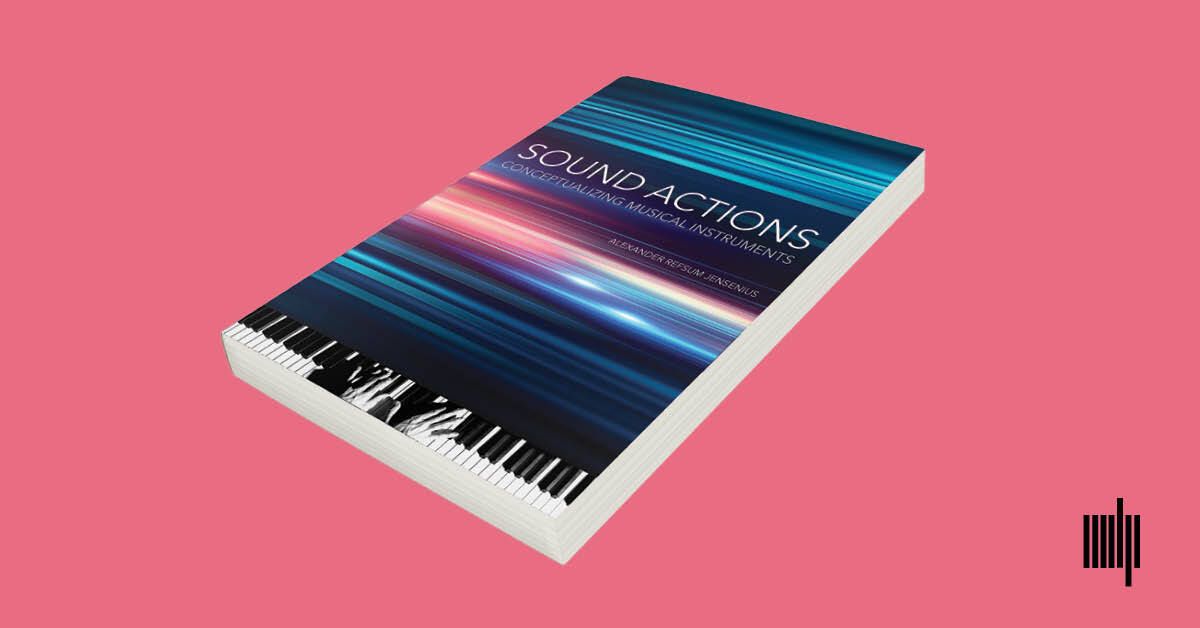
I am happy to announce that my book Sound Actions - Conceptualizing Musical Instruments is now published! I am also thrilled that this is an open access book, meaning that is free to download and read. You are, of course, also welcome to pick up a paper copy! Here is a quick video summary of the book’s content: In the book, I combine perspectives from embodied music cognition and interactive music technology. The approach is what I call “embodied music technology”. ...

December 13, 2022 · 4 min · 806 words · ARJ

The Musicking Quadrant

I have been working on my new book (working title “Sound Actions”) over the summer. It mainly focuses on instruments, and I have struggled to find an analytic lens to explain how “instruments” are changing due to new (music) technologies. Now, I have come up with the concept of a musicking quadrant that summarizes four main types of musical activities: composing, performing, perceiving, and analyzing: ...

August 10, 2021 · 1 min · 173 words · ARJ

Splitting audio files in the terminal

I have recently played with AudioStellar, a great tool for “sound object”-based exploration and musicking. It reminds me of CataRT, a great tool for concatenative synthesis. I used CataRT quite a lot previously, for example, in the piece Transformation. However, after I switched to Ubuntu and PD instead of OS X and Max, CataRT was no longer an option. So I got very excited when I discovered AudioStellar some weeks ago. It is lightweight and cross-platform and has some novel features that I would like to explore more in the coming weeks. ...

March 18, 2021 · 4 min · 796 words · ARJ

Music and AI

Last week I was interviewed about music and artificial intelligence (AI). This led to several different stories on radio, TV, and as text. The reason for the sudden media interest in this topic was a story by The Guardian on the use of deep learning for creating music. They featured an example of the creation of Sinatra-inspired music made using a deep learning algorithm: After these stories were published, I was asked about participating in a talk-show on Friday evening. I said, yes, of course. After all, music technology research rarely hits the news here in Norway. Unfortunately, my participation in the talk-show was cancelled on short notice after one of the other participants got ill. I had already written up some notes on what I would have liked to convey to the general public about music and AI, so I thought that I could at least publish them here on the blog. ...

November 22, 2020 · 8 min · 1503 words · ARJ